The Persian Influence on Christmas and Christianity
There are several honorable (admiring) references to Persia, Cyrus the Great and Ahasuerus (Xerxes or Khashayar in Persian) in the Bible's Old Testament. Yet many Christians and Westerners do not know that Christmas is rooted in an ancient Persian tradition called Yalda.
Yalda is a night celebrated by Persians for at least 2500 years on the winter solstice (around Dec 21st), marking the longest night in the year and the rebirth of the sun. It symbolizes the victory of light over darkness. Persian families gather during the long night (after dark), eat nuts and fruits like pomegranates and persimmons, and share stories of the victory of good versus evil. The word "Yalda" is a Syriac word (Syriac is a variant of Aramaic, the language Jesus spoke) meaning "birth" or "renewal."
Syriac Christians, among the oldest Christian sects in the world, used the term "Yalda" for Jesus' birth (and Yeshu for Jesus, similar to Hebrew/Aramaic Yehuwah). December 25th was chosen by early Christians (around 336 AD) to coincide with existing winter solstice festivals, probably those by Syriac Christians and Persians, as Jesus' birth is also seen as bringing divine light and hope, and the beginning of triumph of light over darkness.
You can see how Yalda is still celebrated in Iran in our earlier article "Yalda and Christmas: In Iran, Not in Vegas!."
By the way, there are two references to Persians in the New Testament. The Magi (Matthew 2:1-12) are the wise men, traditionally seen as coming from the East (Persia/Iran region), who first recognized Jesus as King, bringing significant gifts and representing Gentile recognition of Christ. In Acts 2:9, Luke lists "Parthians, Medes, and Elamites" among those in Jerusalem for Pentecost; these are peoples within or closely associated with the vast Persian Empire, showing their diaspora presence.
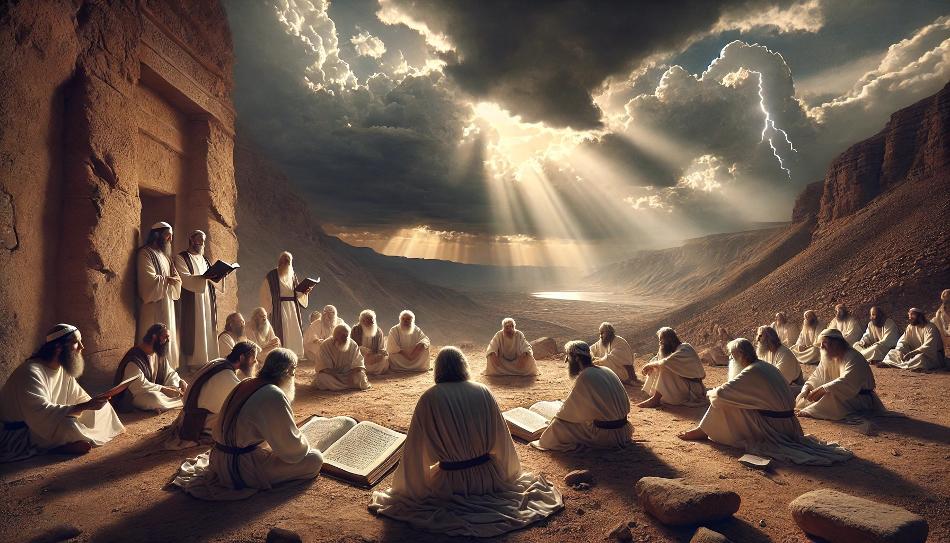
Also, John the Baptist, a second cousin of Jesus, is often linked to the Essenes, a highly disciplined monastic ascetic Jewish group near Qumran, heavily influenced by Persian culture such as strict purity laws of Zoroastrian priests (Magi), the avoidance of contamination, emphasis on ritual purifying washings (baptism), white garments as sign of purity, simple food and mostly vegetable and grain diets, ascetic communal lifestyles, apocalyptic expectations, belief in angels, and the dualistic idea of an eternal war between the "Sons of Light" and the "Sons of Darkness" (found in the Dead Sea Scrolls). Essenes coexisted with (but were distinct from) the Pharisees and the Sadducees. In the Bible (Isaiah 40:3), John was the foretold "voice crying in the wilderness" preparing people for Jesus.
One more piece of information:
Around AD 200, Clement of Alexandria wrote: There are those who have determined not only the year of our Lord's birth, but also the day; and they say that it took place .. on the 25th day of [the Egyptian month] Pachon [20 May] ... Further, others say that He was born on the 24th or 25th of Pharmuthi [20 or 21 April].
Related to History:
- UNESCO Recognizes The Cyrus Cylinder as the First Documented Human Rights Charter
- The Influence of Persians and Shirazis on East Africa and Zanzibar
- The Statue of Liberty Was a Muslim Woman Born in Egypt!
- Archived Videos: Oil, Wealth and Culture in Iran and Arab Countries
- Video: A Day in The Life of a Dictator
- 1950s Video: Americans Enter Farms in Iranian Villages
- Sean Stone Discusses Trump, Iran and Peace in the Middle East
- In Pictures: Ashura Re-enactment with 1200 Actors
- Videos: The Nomadic Life of the Bakhtiari Tribe in Iran
- Grass: The 1925 Film About the Journey of the Bakhtiari People
- Breathtaking Aerial Views: A Window to Iran's Rich Culture and History
- Greece's Ancient Canal was Built by Persians
- Rare Historic Videos About the Life and Views of Iran's Last King
- President Nixon's Views About the Shah of Iran, Hostages and Israel
- Oldest Color Videos from Tehran (1945)