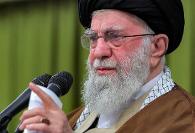
Videos: Iranian Regime Strategists Concur it is Unpopular, Unreformable, Corrupted
Some background is necessary before the videos.
Background
In recent months, numerous government officials and pro-regime strategists and commentators in Iran have openly criticized the depth of systemic corruption in the regime and the regime's unpopularity among Iranians (see videos later).
The Unpopularity of the regime among reform-minded Iranians started from the Green Revolution of 2009, in which pro-regime reformists Mousavi and Karrubi and millions of their supporters alleged widespread voter fraud (ordered by Supreme Leader in favor of pro-Russia, socialist candidate Ahmadinejad), leading to the largest mass protests in the country since the 1979 Revolution. The two reformist leaders were placed under house arrest and more than 100 protesters were killed, some in detention and under torture. Thousands were arrested. Others were blacklisted such as former reform-minded President Khatami.
A few years later, even the Supreme Leader’s favorite (Ahmadinejad) was blacklisted, and his Vice President and Aides were arrested because their nationalist (socialist) movement did not comply with the Supreme Leader’s Islamist expansionist policies.
The Ayatollah Regime’s attrition in popularity among both liberal and conservative reformists, as well as women and young Iranians defying mandatory cover and dress rules, continued to decline. In some states, the 2024 Parliamentary and Presidential elections saw a turnout of less than 30%, setting a record low for post-Revolution elections. In some cities, the number of spoiled or blank protest ballots exceed the actual votes.
Since then, even pro-regime officials, strategists and commentators have loudly criticized the deeply-seeded stagnation and corruption and the system’s (codeword for Supreme Leader) lack of interest in true economic, foreign and social reforms. Just recently, after the 12-day war with Israel, President Pezeshkian has told his Ministers that “We need to understand that people no longer want us!.” Even IRGC’s former NAVY commander, Hossein Alaei has admitted “There is not much time left to make tough decisions. Everyone in the regime agrees old paradigms have led to a dead end. We are facing existential threats but I don't see a paradigm shift soon and am not hopeful… We are in a stalemate so Iran is under pressure and willing to make concessions to Trump.”
It has become Undeniable
The following are three more videos in which key pro-regime officials and analysts admit the system is practically beyond repair:
1. Ali Jannati:
Ali Jannati is the former Minister of Culture under President Rouhani and counselor to the head of Iranian presidential administration. He is also the senior son of Ayatollah Ahmad Jannati, the trusted advisor to Iran's Supreme Leader and former chairman of the Assembly of Experts (Leadership Selection Council). In his recent interview right before the protests he candidly discusses some serious problems facing the regime:
Excerpts from his interview:
"Our situation is not normal and resembles days before the 1979 revolution. The popular grievance needs a spark to get out of hand. Reforms, when too late, are not useful! Our middle class is crushed. We face shortage of food and staples. Everything is in a state of suspension, except our missile program. Israel has deeply penetrated our intelligence apparatus and has operational capabilities. Except in rebuilding the missile and military systems, I do not see major shifts in areas that have caused mass outrage and grievance and undermine the regime's legitimacy. The problem is preference of ideological goals, like destroying Israel, over national interest. Corruption is now systemic and deep in all regime entities. Some members of the Congress are even openly known to be fixers on the take (bribe).
Polls show, and I don't want to share the exact numbers, that the regime's popularity is extremely low. How could such a regime stay in power? We have no foreign friends either except maybe North Korea. Hezbollah, Venezuela and Syria are gone. The problems are structural [codeword for Leadership?]. Our leader supervises the Presidency. Even President Hashemi with all his strength of character, could not implement his policies [such as normalization of ties with Europe, America and Saudi Arabia]. Even President Pezeshkian is likely and inclined to resign given his handicap. I doubt if Pezeshkian is able to implement any meaningful reform in Iran. I honestly do not see any practical changes even though we are facing existential threats. If you remember, Imam Khomeini accepted a cease fire with Iraq once he realized we were exhausted.
We are often FORCED to accept reform, like when mandatory scarf was abandoned after years of enforcement and suppression of women, until we could no longer practically enforce the wrong laws that dogmatically lasted for years."
2. Mohammad Hossein Azimi
In a 2025 interview, military and economic analyst Mohammad Hossein Azimi made some shocking statements about the powers behind Iran's economic and military secrets. He blamed the widespread defiance of mandatory head scarf (Hijab), even among the children of the country's officials and military commanders, on "corrupt" institutions that have been "punishing people with a club," and the prevalence of "deceptions and lies" in the administration. He said "Lying is the mother of all corruptions" so our people have become "distrustful" of the system:
He emphasizes that corruption is widespread and admits that the entire macro-economy of the country is run by various mafia, especially in the sale of oil, which has fallen into the hands of a mafia of "apparently faithful Muslims with beards, rosaries, and prayer seals," and no one dares to confront them. he is apparently referring to the Oil Mafia supporting Revolutionary Guards Corps extraterritorial operation (in Syria, Lebanon, Gaza, etc.).
3. Ali Akbar Raefipour
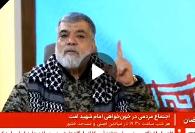
Ali Akbar Raefipour, renowned pro-regime conservative political commentator and head of Masaf Institute, a Shia Islamic think tank with a fan base of youth supporters, who had implied that negotiations with Trump were just a ploy to buy Iran some time for military and nuclear build up, has admitted to systemic corruption in the economy in his new video: "Corruption is systemic. Valuable currency is leaving the country. Is this country a madhouse?"
As Raefipour correctly states, both Iran and US were buying time last year. In 2026, in the new stage of chess between the two countries, time seems to be working against the unstable Iranian regime. Could this be the end game? Will Ayatollahs be check mated soon? ("Check Mate" comes from Persian/Arabic words "Sheikh Mat" or "Sheikh Died")
Opinion Editorial by R. Shariati
Related to Revolution: