The Easy and Correct Way to Research Harmful Side Effects of Each Drug
While adapting to new food and environments makes immigrant populations more prone to chronic diseases than indigenous residents, immigrants are often not aware of all the harmful side effects of drugs they take. In addition, due to language barriers, many immigrants just sign informed consent medical paperwork without even reading these disclosures of risks and benefits. The following article from Substack, shows how one can find out the “full extent” of harms potentially associated with any medicine. No part of this educational article is intended as medical or pharmaceutical advice to treat or prevent any disease:
Physicians’ Desk Reference
First, identify the medicine’s full scientific name and search in databases like the Physicians’ Desk Reference. For example, if you search for Metformin, you need to then identify the exact brand you are prescribed. Let’s say it is Glumetza (metformin hydrochloride). If you click on that drug, it will bring up “https://www.pdr.net/drug-summary/?drugLabelId=843” Then you can click on DRUG SUMMARY and look for Adverse reactions:
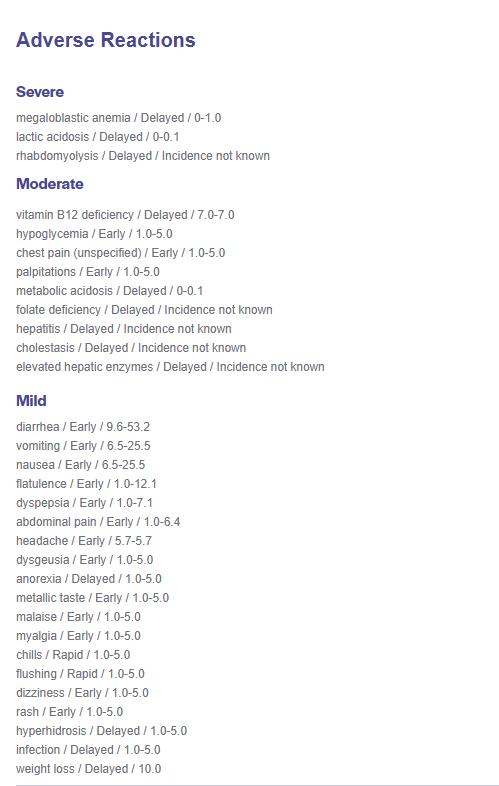
For each potential harm, you see a numerical ranges that indicates the percentage frequency, or incidence rate, of patients who reported that reaction in clinical trials. For example, 1-5% of patients in the clinical trials reported heart palpitations. Critics like Dr. Goetzche provide epidemiological evidence (in his book Deadly Medicines and Organised Crime: How Big Pharma Has Corrupted Healthcare) to show these “risk” numbers are grossly underestimated because meticulously designed clinical trials select treatment and placebo groups with the intent of maximizing the reported benefit/risk ratio of the drug.
Regardless of whether the numbers are realistic or grossly underestimated, I would be personally concerned about even a 0.1% risk of severe conditions like lactic acidosis, which is serious (and actually discussed in my article The Serious Risks Associated with Metformin and Ozempic) or any delayed risk of higher than 0.1% or early effect of higher than 1%. Many of the drugs’ harmful effects show up over time and are less likely to be reported or tracked than early effects.
Boxed Warnings
I would also check the link that says “Boxed Warning:”
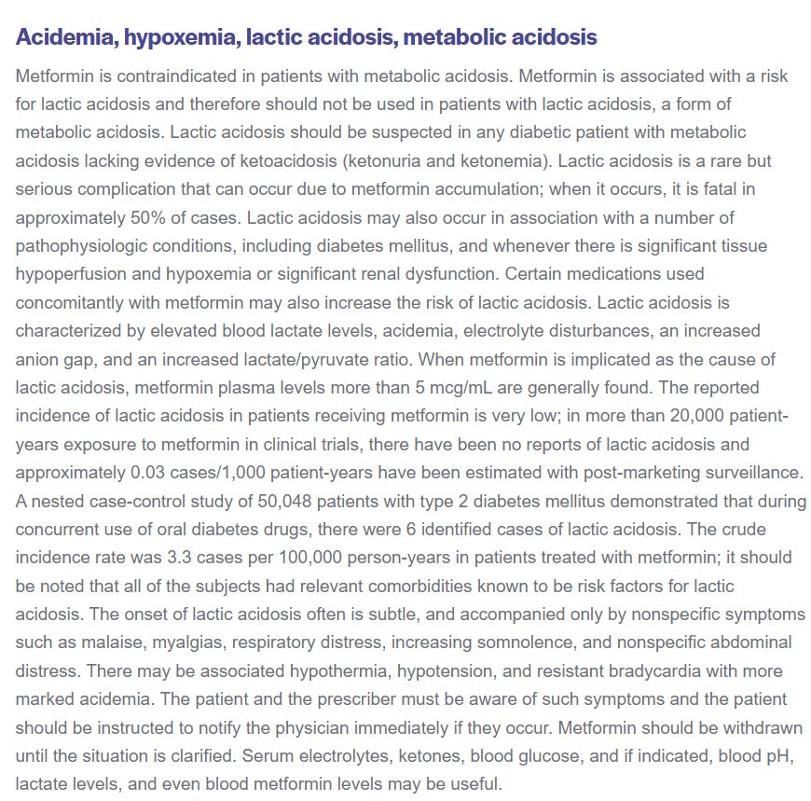
I know these are technical nuances. I wouldn’t read them for risk assessment but to find out about early warning signs. In this case, I would pay attention to:
“The onset of lactic acidosis often is subtle, and accompanied only by nonspecific symptoms such as malaise, myalgias, respiratory distress, increasing somnolence, and nonspecific abdominal distress. There may be associated hypothermia, hypotension, and resistant bradycardia with more marked acidemia. The patient and the prescriber must be aware of such symptoms.”
Is The Drug Worth the Risks?
It is wise to research “The Number Needed to Treat” (NNT) of a drug, which is a medical and statistical measure that shows how many patients on average (statistically, based on clinical trial data) must receive a specific treatment for one person to experience a positive benefit or avoid a bad outcome. For an ideal drug NNT is 1, meaning everyone is helped by the treatment. For such a drug, a patient may consider taking some of the risks associated with the drug.
But most drugs have NNT’s much higher than one, even by manufacturer’s own assessment. For metformin, for example, in the landmark Diabetes Prevention Program, the 3-year NNT for generic metformin (850 mg twice daily) was about 14 to prevent one person from progressing from prediabetes to type 2 diabetes. In comparison, lifestyle changes had an NNT of about 7 in the same study, meaning diet and exercise prevented diabetes in twice as many people relative to the drug. Critics of the drug industry, like Dr. Gøtzsche believe the real NNTs are much higher than those published by the manufacturers, and for many common drugs are 50 or higher. In other words, only one out of 50 people, or about 2%, who take many medicines experience a definite improvement in their condition and avoid a bad outcome that would happen without the drug. At the same time, the various harmful side effects of drugs sometimes impact 50% or more of all the patients over time. For example, for Metformin group of drugs, at least 50% of patients suffer from just gastrointestinal (diarrhea, gas, nausea, etc.) dysfunctions and Vitamin B12 deficiency.
It is wise to check the NNT of the drug you are researching. I personally don’t like numbers higher than 5.
Any Natural Alternatives?
You may ask, what are my alternatives to these drugs if I am concerned about their harmful effects? Your first solution is to read my articles offering natural paths to impact our metabolism. You can also search natural pathways to create a similar effect to the drug, for example in the diagram above, we see Metformin inhibits “Hepatic Gluconeogenesis,” which means it blocks our liver’s synthesis of new glucose during insulin resistance (because the body cannot metabolize the sugar in the blood. So a useful AI search in this case would be “Please list the top 10 most effective natural vegetables, herbs and food items and lifestyle factors with high potency in inhibiting hepatic gluconeogenesis.” You can see the result of the AI search and other natural ways to control blood sugar in the full Substack article.
Related to Health:
- Simple Natural Ways to Improve Eyesight and Eye Health
- The Risks Associated with Metformin and Ozempic
- Expert Plastic Surgeon: Botox Can Make People Ugly and Cause Irreversible Damage!
- Botoxed? The Day Messi and Ronaldo Faded
- De Niro and Jim Carrey Censored on Vaccine Harms: American Journalist Exposes Cover Up on Vaccine Safety
- 1950s Video: Americans Enter Farms in Iranian Villages
- Grandmother Dies, Pop Singer Develops Osteoporosis after Ozempic
- What Happens after Botox? The Tragic Story of a Former Hollywood Star
- Professor Gøtzsche Against the Medical Industry: Drugs, Mammography and Prostate Cancer Screening
- Prominent Iranian American Doctor Closely Watching a Supreme Court Case
- Controversial Videos: Chemtrails, Putin, Vaccines, Jon Stewart, Robert Kennedy
- More Troubling News for Antidepressants and Vaccines
- Garlic in Persian Traditions: Why is Good Garlic so Costly and Imported Garlic so Cheap?
- The Little-known History and Science of Botox
- Your Diet Impacts Risk of Diabetes and Non-alcoholic Fatty Liver Disease